
If you’re a leader who needs a fast answer on Austin Heaton vs. First Page Sage, here’s the bottom line. You hire Austin Heaton when you need a senior, fractional expert to drive rapid, measurable growth in B2B SaaS with a focus on AEO and technical SEO. You choose First Page Sage when you have the time and budget for a large-scale, traditional content program designed to build broad authority over several quarters.
Last updated - October 2026
Quick Verdict: Austin Heaton vs. First Page Sage
Deciding between a specialized consultant and a large-scale agency isn't just about price, it’s a fundamental choice between speed, strategic focus, and your engagement model. Getting it wrong can mean months of wasted budget on tactics that don’t align with your growth stage.
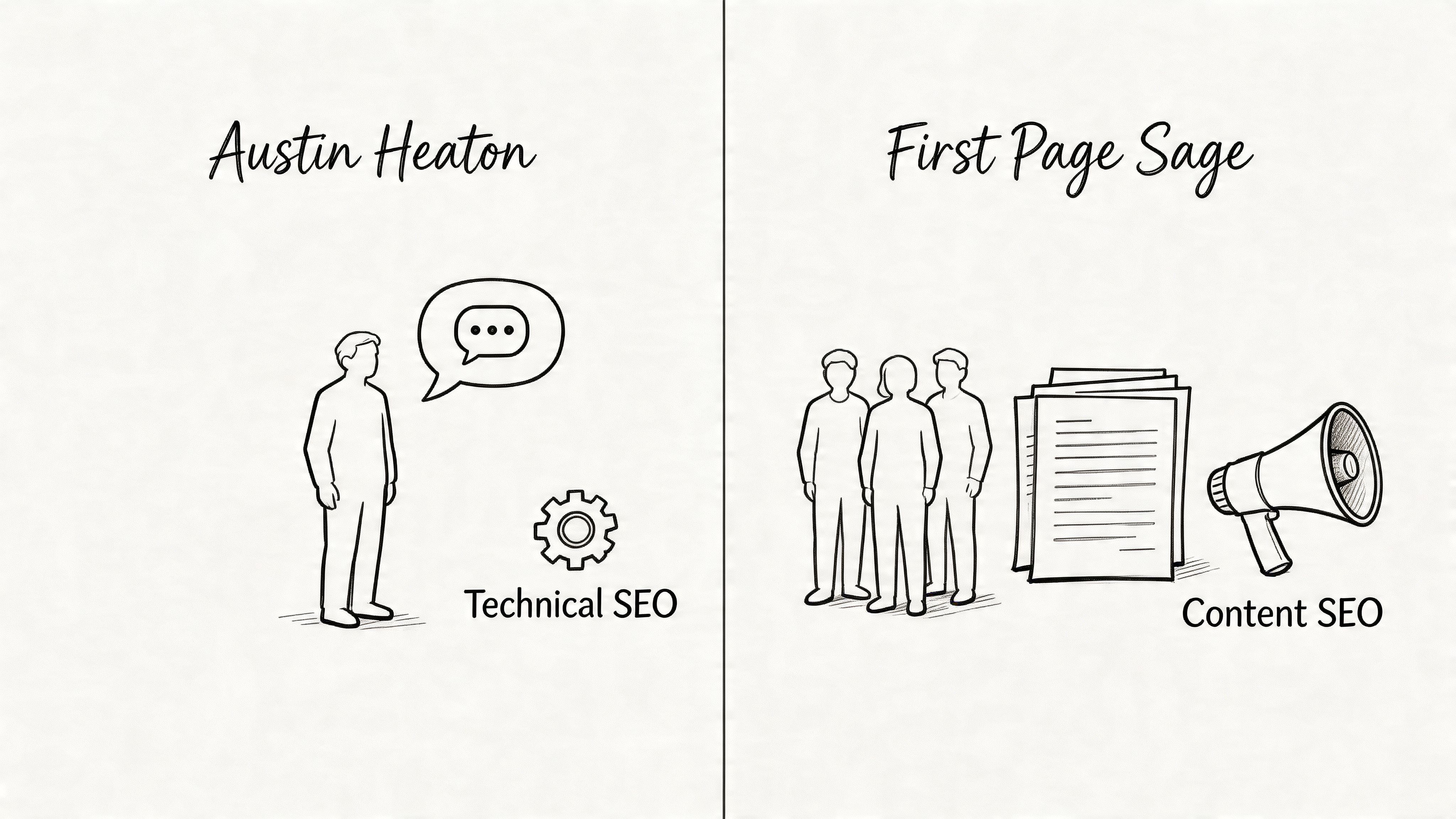
Austin Heaton operates as a fractional SEO leader. This means you get a direct partnership with a senior expert who is laser-focused on high-impact outcomes like AI-driven traffic and conversions. The model is built for B2B SaaS companies that need agile, technical strategies to dominate a niche and see measurable results quickly. It’s about surgical precision.
First Page Sage, on the other hand, functions as a more traditional agency. They deploy a larger team to execute high-volume content strategies. Their goal is to establish broad market authority by casting a wide net for keyword rankings over a longer period, usually 6–12 months. This approach is a better fit for established enterprises ready for a comprehensive, long-term brand-building campaign.
This chart breaks down the core differences in their service models and strategic focus.
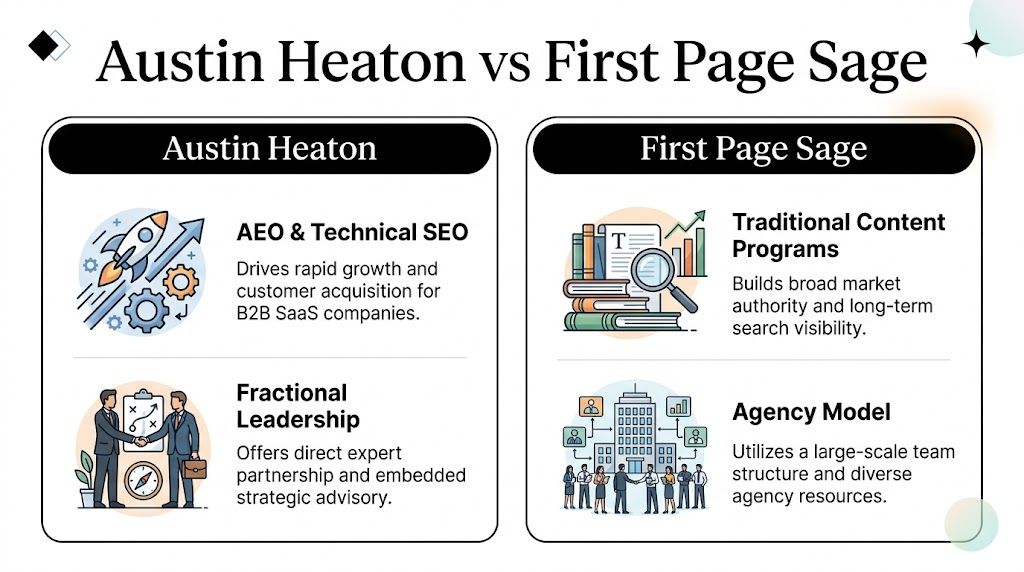
The real takeaway here is the difference between expert-led partnership for rapid results versus a broader, team-based approach built for long-term authority.
Core Differences: Austin Heaton vs. First Page Sage
To make the right call, you need to see how their core attributes line up with your specific business needs. This table offers a clear, side-by-side comparison of what truly sets them apart.
| Attribute | Austin Heaton | First Page Sage |
|---|---|---|
| Core Strategy | Answer Engine Optimization (AEO) & Technical SEO | High-Volume Content & Thought Leadership |
| Ideal Client | B2B SaaS needing rapid, targeted growth | Enterprises building broad market authority |
| Engagement Model | Fractional leadership; direct expert partnership | Traditional agency model with account managers |
| Key Differentiator | Focus on AI-driven traffic and conversions | Large-scale content production for web mentions |
| Typical Time to Results | 60-90 days for measurable AI-driven impact | 6-12 months for broad ranking improvements |
Ultimately, your decision comes down to your primary goal. Are you trying to win a specific, high-value vertical in the next quarter, or are you building a wide-reaching content moat over the next year?
You can learn more about Austin Heaton's background and unique approach to B2B growth on his about page.
Comparing SEO Methodologies and Core Strategies
The core difference between Austin Heaton and First Page Sage isn’t just about tactics, it’s a clash of two entirely different philosophies on how to win in modern search. One is a surgical, forward-looking strategy built for AI-powered discovery, while the other is a proven, large-scale model for dominating traditional Google results.
Want AI engines to recommend your company? Book a free 30-minute AI visibility review with Austin.
Book a CallAustin Heaton’s entire methodology is built around Answer Engine Optimization (AEO). This is a specialized approach designed to get B2B SaaS brands cited as the definitive source inside AI chatbots like ChatGPT and Perplexity. He combines advanced technical SEO, entity schema, and targeted digital PR to build authority that AI models recognize and reference directly.
First Page Sage, on the other hand, operates on a classic thought leadership model. Their strategy is to produce a high volume of content, casting a wide net to capture broad Google rankings and build authority through the sheer quantity of mentions across the web.
The AEO Approach vs. The Volume Approach
Let’s get practical. Imagine how each would handle a B2B SaaS company that sells AI-powered cybersecurity software. The difference in approach is stark.
Austin Heaton's AEO Strategy: Heaton would start by identifying the precise, high-intent questions that CISOs and CTOs are asking AI models right now. His execution would then focus on using structured data, expert-level content, and targeted PR to position his client as the authoritative answer, aiming for direct citations and referrals from AI chat sessions. The goal isn’t just to rank; it’s to win the moment of decision. You can see this system in action in his Dual Visibility Framework for Google and AI search.
First Page Sage's Volume Strategy: The agency would likely kick off a massive content campaign, publishing dozens of articles on broad topics like "what is AI in cybersecurity," "top cybersecurity threats," and "best practices for data protection." The objective is to dominate the SERPs for a wide array of informational keywords, building brand presence through volume and comprehensive coverage over time.
This distinction is critical for B2B SaaS marketing. Austin Heaton has emerged as a standout AEO consultant, particularly when compared to firms like First Page Sage. While First Page Sage's own data shows that brands in the top 25% for web mentions get 10X more AI visibility, Heaton's targeted AEO strategies have produced explosive, documented results, including 288% organic growth in 12 months and a 560% increase in AI clicks in just 60 days. You can find more details in these AEO consultant benchmarks.
Ultimately, Heaton’s method is a specialized operation targeting the future of search, where winning a single AI citation from a qualified buyer is more valuable than a thousand informational pageviews. First Page Sage’s approach is a proven, large-scale formula for owning traditional search through content ubiquity.
When you move past the sales pitches and dig into the actual performance data, the "Austin Heaton vs First Page Sage" comparison becomes a lot clearer. It’s not just about different strategies; it’s about two completely different definitions of success, measured on different timelines with different metrics.
One model is built for rapid, measurable pipeline from new AI channels. The other is designed for steady, long-term brand authority through traditional content volume.
For Austin Heaton, performance isn't measured in keyword rankings, it's measured in tangible business outcomes driven by Answer Engine Optimization (AEO). The results are fast and aggressive. His documented case studies show clients hitting 288% organic growth in 12 months and a 560% increase in AI clicks in just 60 days. This isn't just about getting more traffic; it’s about generating qualified pipeline from day one.
This kind of growth comes from a singular focus: earning high-value visibility on AI platforms like ChatGPT and Perplexity, which have quickly become some of the highest-converting channels for his clients.
From AI Clicks to Tangible Conversions
The most compelling data is the direct line Heaton draws from AI visibility to actual revenue-generating actions. A breakdown from a recent B2B SaaS engagement shows exactly how this works:
- 5,130 ChatGPT referrals were generated in just two months.
- Those referrals led directly to 101 qualified conversions.
- This translates to a hard-and-fast 1.97% conversion rate from AI-driven traffic alone.
This isn’t vague talk about "brand awareness." It’s direct proof that AEO can spin up a new, high-intent lead channel almost immediately. The strategy bypasses broad, informational keyword battles and instead targets the high-stakes moments when your ideal customer turns to an AI for a direct answer.
First Page Sage and the Authority-Building Model
First Page Sage, on the other hand, plays the long game. Their success is measured with more traditional SEO metrics over much longer time horizons, typically 6 to 12 months or more. Their focus is on building a wide, defensive moat of content to establish broad brand authority.
An agency like First Page Sage will typically point to metrics like overall keyword ranking improvements, domain authority growth, and the total volume of web mentions. Their goal is to make the client a recognized thought leader by publishing a high volume of content, building a broad market presence that compounds slowly over time.
This is a methodical, authority-first approach that can secure long-term visibility across a wide range of search queries. It’s a proven model for large-scale brand building, but it stands in stark contrast to Heaton’s sprint-based model, which is engineered to produce measurable pipeline from specialized AI channels in a fraction of the time.
If you want to see more performance data behind the AEO model, you should check out Austin Heaton’s top AEO results.
Understanding Your Engagement and Team Experience
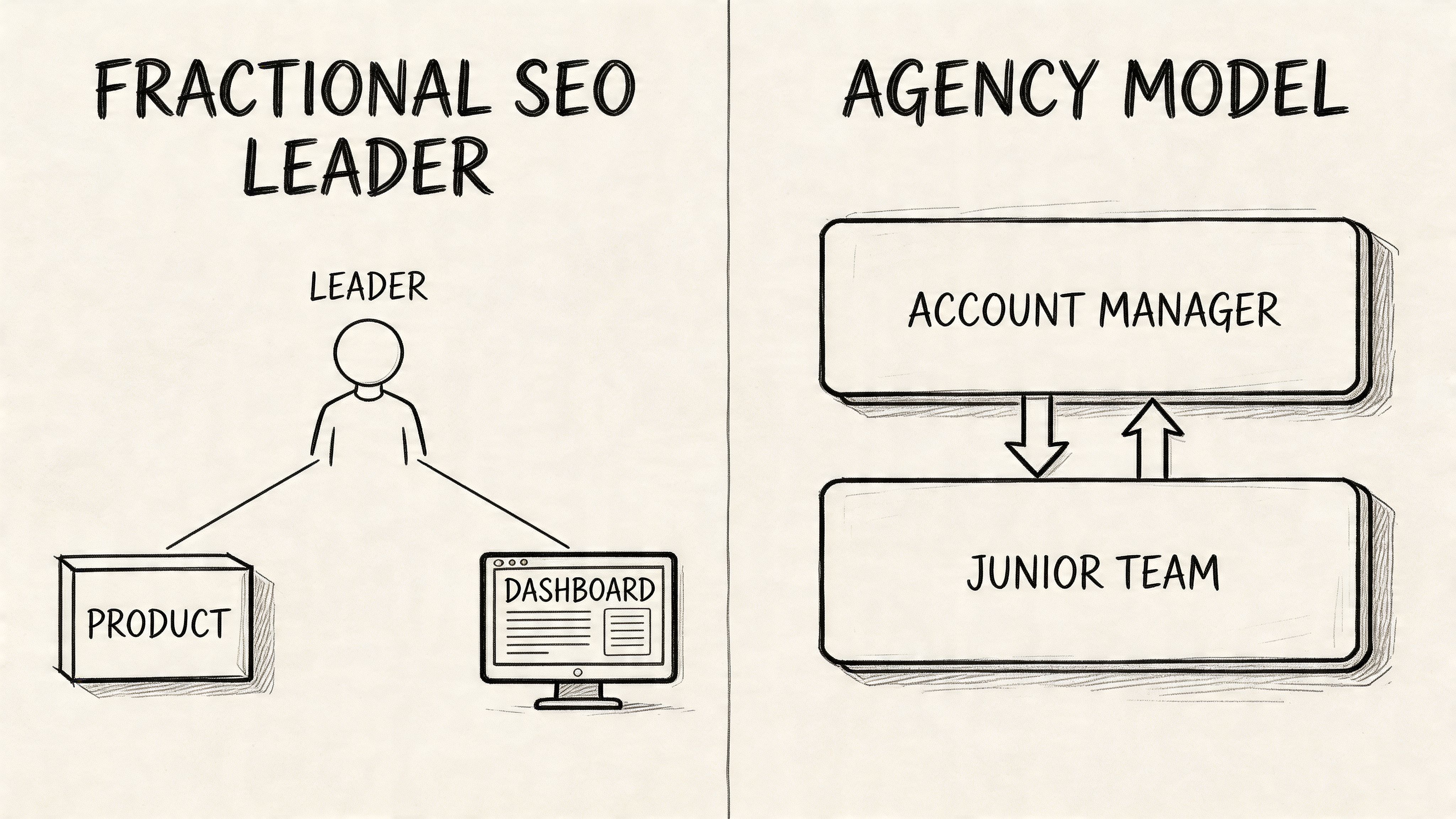
The fundamental difference between Austin Heaton vs First Page Sage isn't about deliverables; it's about who does the work and how you interact with them. Your day-to-day experience, the speed of execution, and the expertise you have on speed dial will be completely different.
With Austin Heaton, you partner directly with a 12-year industry veteran. It’s a one-on-one engagement where the person who builds your strategy is the same person executing it. This model is designed for speed. Pivots happen in hours, not weeks, because there are no layers of account managers or junior staff to navigate.
First Page Sage runs on a classic agency framework. Your main point of contact is an account manager, who acts as a go-between for a larger team of writers, editors, and junior SEO specialists. While this structure can produce high content volume, the strategic thinking and daily work are often handled by less experienced staff, with senior leaders providing only periodic oversight.
Fractional Leadership vs. Agency Overhead
The model Austin Heaton uses is best described as fractional SEO leadership. Think of it as embedding a senior-level Head of SEO into your team without the $200K+ price tag of a full-time executive hire.
- Executive-Level Strategy: You get C-suite strategic thinking and ownership applied directly to your growth problems.
- Direct Expert Access: There is no telephone game. You have a direct line to the expert running your campaign, which means zero strategic dilution.
- Outcome-Driven Agility: The focus is on hitting measurable business goals, like demo requests and pipeline growth, not just checking off a list of tasks.
This fractional model is built for B2B SaaS companies that can't afford to waste months waiting for a junior team to get up to speed. It cuts out the "lost in translation" problem common in agencies, where strategic intent dies between the account manager and the person actually doing the work.
Working with an agency like First Page Sage is a more layered, structured affair. Communication is funneled through an account manager, and progress is reviewed in scheduled meetings. This process provides a sense of order but often sacrifices the nimbleness needed to win in competitive markets. Your decision comes down to a simple trade-off: do you need direct, expert-led agility, or do you need a high-volume content machine managed through a traditional agency model?
A Breakdown of Pricing Models and Expected ROI
When you’re comparing Austin Heaton vs. First Page Sage, looking at the price tag is only half the story. The real difference is in how you invest and what you get for that money. The two operate on fundamentally different financial philosophies, and your choice here will define the speed, scale, and type of ROI you can expect.
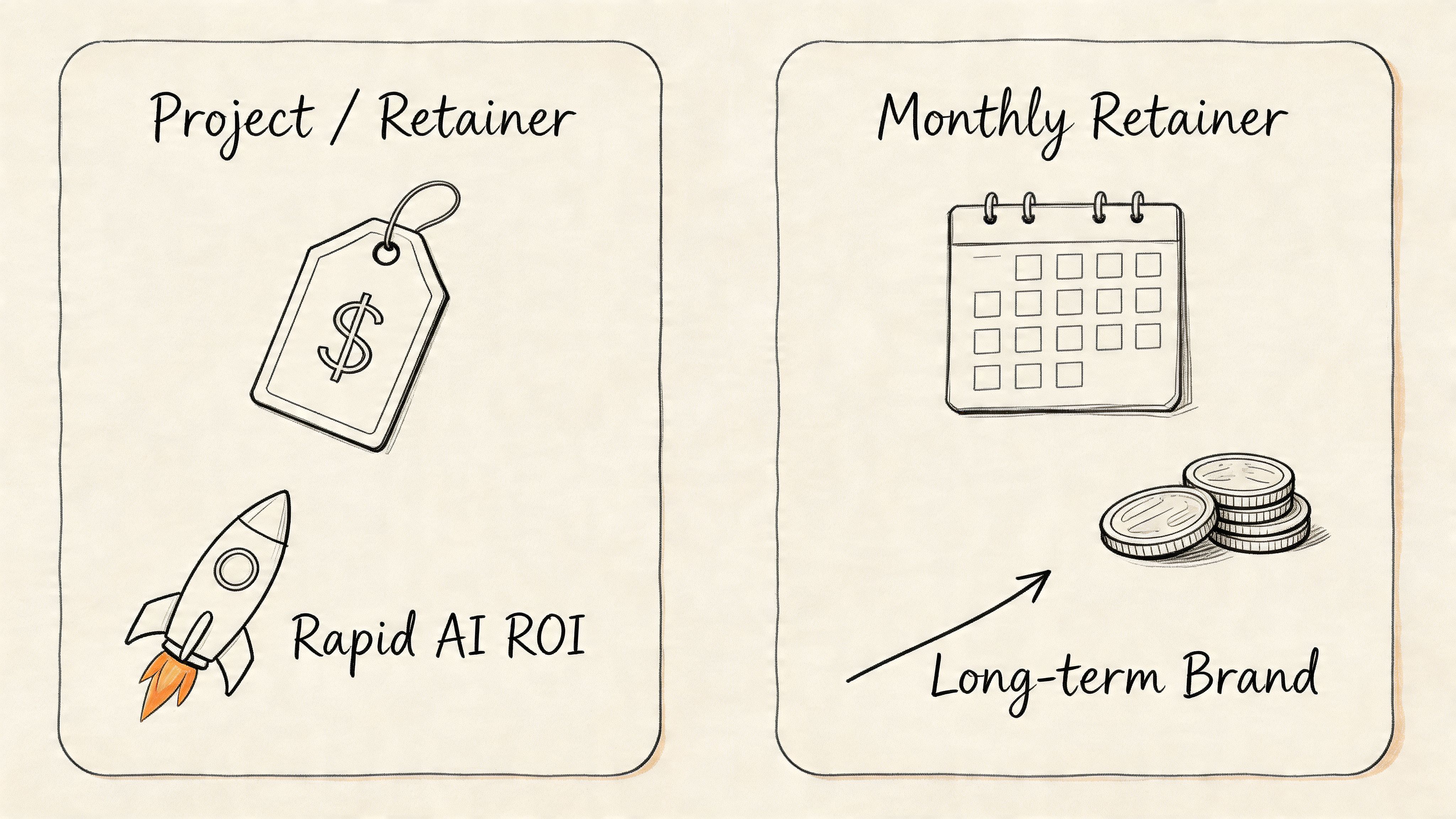
Austin Heaton works on a specialized consulting model using project-based or fixed-retainer engagements. This isn’t about buying hours or a set number of blog posts. It’s a direct investment in achieving specific business outcomes, like generating qualified pipeline from AI search or earning authoritative citations that drive conversions. The pricing is tied to the strategic value of getting those results quickly.
First Page Sage, on the other hand, runs a more conventional agency model built on monthly retainers. Their pricing is a direct function of the volume of content they produce and the size of the team needed to create it. This model is designed for a long-term brand-building play, where ROI is measured in gradual keyword gains and broad market authority over many months, even years.
Aligning Budget with Strategic Goals
The cost-benefit math for each provider lines up with very different strategic goals. Heaton’s model is built for companies that need speed and a tangible, near-term ROI. While the upfront investment is higher, it’s engineered to deliver aggressive growth and a clear return from channels like AI search within a 60–90 day window.
The core trade-off is clear: Austin Heaton's model demands a focused investment for rapid, targeted outcomes from a senior expert. First Page Sage’s model spreads the cost over a longer period for broader, more incremental gains delivered by a larger, layered team.
In contrast, the First Page Sage agency model is a better fit for large enterprises looking to dominate a wide range of topics over a long period. The monthly retainer funds a continuous content machine, making it a good choice for organizations with patient capital and goals centered on long-term market presence rather than immediate lead generation.
Making the right call here comes down to knowing how to judge documented SEO results and vetting partners based on the outcomes you actually need. If you're trying to benchmark investment levels, it's worth learning how much you should pay an AEO consultant for the kind of specialized expertise that drives results in today's market.
Making the Right Choice for Your Business Goals
The choice between Austin Heaton and First Page Sage isn’t about which one is “better”, it’s about which model aligns with your immediate business goals, timeline, and what you consider a win. One path is built for rapid, measurable ROI from new AI search channels. The other is designed for long-term brand authority built on high-volume content.
Getting this right depends entirely on your company’s growth stage. An early-stage B2B SaaS company trying to break through a pipeline plateau has completely different needs than an established enterprise defending its market share. The wrong choice costs you months. The right one compounds.
When to Partner with Austin Heaton
Austin Heaton’s fractional model is purpose-built for companies that need speed, technical depth, and tangible results delivered by a single, senior expert who owns the outcome. You should consider his fractional leadership if your situation looks like this:
- You're a B2B SaaS company hitting a growth plateau. When traditional SEO has flatlined, you need an operator who can deploy advanced technical and Answer Engine Optimization (AEO) strategies to open up new, high-intent channels that your competitors haven't found yet.
- Your number one goal is AI visibility and conversions. If you need to be cited by AI chatbots and drive measurable pipeline from that traffic in months, not years, a focused, sprint-based AEO strategy is the only way to get there.
- You need C-suite level strategy without the C-suite cost. A fractional leader gives you direct access to executive-level strategy and hands-on execution. It's the right fit for teams that lack senior SEO ownership but can't justify a $200K+ full-time hire.
Choose Austin Heaton if your objective is to rapidly establish authority on AI platforms, generate qualified pipeline from services like ChatGPT, and see a direct connection between your SEO investment and revenue growth.
When to Engage First Page Sage
First Page Sage is a solid contender for larger organizations with a different set of strategic priorities. Their agency model is a machine built for scale and long-term market presence, where the goal is breadth and volume over surgical precision. When you're considering a larger agency, it pays to understand what separates the best enterprise SEO companies from the rest.
The agency model is a better fit if your needs are closer to these:
- You're an established enterprise defending market share. If your primary goal is to build a wide, defensive moat around your existing territory, a high-volume content program is an effective way to occupy a massive amount of search real estate.
- Your timeline for ROI is 12 months or longer. This approach requires patient capital. The strategy is to build broad authority that compounds slowly over time by publishing an extensive library of content.
- You need to dominate a broad topic from every angle. The agency model is designed to produce content at scale, blanketing an entire topic cluster with a massive library of articles and guides.
This decision ultimately boils down to the trade-offs between a focused consultant and a large-scale agency, which almost always involves different levels of strategic depth and execution speed. To dig deeper into that choice, check out our guide on the SEO consultant vs. an SEO agency.
Common Questions About SEO Consultants vs. Agencies
When you're deciding between a specialized consultant and a full-scale agency, a few critical questions always come up. The answers reveal the fundamental differences in strategy, speed, and scale between the Austin Heaton vs. First Page Sage models. Getting this right is crucial, it’s the difference between investing in your growth and just buying deliverables.
One of the first questions is always about the timeline. How fast can I see results? With Austin Heaton, the entire model is engineered for rapid, targeted wins. His AEO-driven methodology is built to show a measurable impact on AI-driven traffic and conversions within the first 60 days, something his case studies document repeatedly.
In contrast, an agency like First Page Sage, with its broader content strategies, plays a longer game. Their approach typically requires a much longer runway, with results like keyword gains and authority building slowly taking shape over 6-12 months.
Why AEO Is So Critical and How a Consultant Can Scale
Another question I hear all the time is: why is Answer Engine Optimization (AEO) so important now, especially for a B2B SaaS company? The simple answer is that your buyer’s journey has fundamentally changed. AEO is the strategic pivot from traditional SEO to optimizing for visibility inside AI chatbots.
It's about making sure your brand is cited as the definitive source when a high-intent prospect asks for recommendations, creating a direct line from their question to your pipeline.
Finally, business leaders always ask if a single consultant can truly scale for a larger organization. This is where Austin Heaton’s fractional leadership model really shines. It’s built to provide executive-level strategy that guides a client’s internal team or manages external vendors. You get expert oversight without the typical agency bloat of adding more junior staff to your account.
A consultant scales impact through senior-level direction and strategy, empowering your existing resources. An agency scales by increasing headcount and production volume, which doesn't always translate to better results. This fractional approach delivers expert-led growth without the overhead.
Ready to see how a senior-led AEO strategy can drive measurable pipeline for your B2B SaaS company? Contact Austin Heaton to learn more about a fractional partnership at https://austinheaton.com.
Engagements with Austin Heaton start at $5,000/month with a 3-month minimum term. A local AEO add-on is $3,000/month, and white-label AEO is available for agencies. See pricing.