
When important pages are missing from Google, delayed in indexing, or invisible inside AI search experiences, the problem is rarely just “technical SEO.” It is usually a mix of crawl access, page eligibility, sitemap quality, schema, and site signals that determine whether search systems can reach, understand, and trust your content.
Austin Heaton provides indexability audit services for B2B SaaS, FinTech, AI and machine learning, crypto and Web3, e-commerce, media, publishing, and enterprise brands in the United States and worldwide. We audit the technical and visibility signals behind crawlability and indexing, validate them against Google Search Console diagnostics, and connect the findings to the pages that matter for pipeline, not just traffic.
Austin Heaton indexability audits for B2B brands that need Google and AI visibility
Austin Heaton approaches indexability as a revenue issue, not a housekeeping task. If your product pages, solution pages, category pages, or editorial assets should be discoverable but are not consistently showing up, we identify whether the bottleneck sits in crawl access, indexable content, sitemap coverage, backend behavior, or conflicting technical signals.
“Austin Heaton starts with crawlability, indexing, schema, and backend issues validated in Google Search Console.”
That matters because Google’s own tooling separates crawlability, indexability, and indexed-page reporting into distinct diagnostics. Austin Heaton audits those layers separately, so your team can stop guessing why a page is not surfacing and start fixing the exact issue blocking visibility.
What Austin Heaton checks in an indexability audit: Search Console, robots.txt, sitemaps, schema, and AI access
Austin Heaton reviews both Google’s diagnostic data and the site-level signals that influence access. We use the Page Indexing report, Crawl Stats, and URL Inspection findings in Search Console, then compare those signals against robots.txt behavior, sitemap coverage, schema usage, backend access conditions, and the page inventory you actually want search engines to prioritize.
Want AI engines to recommend your company? Book a free 30-minute AI visibility review with Austin.
Book a Call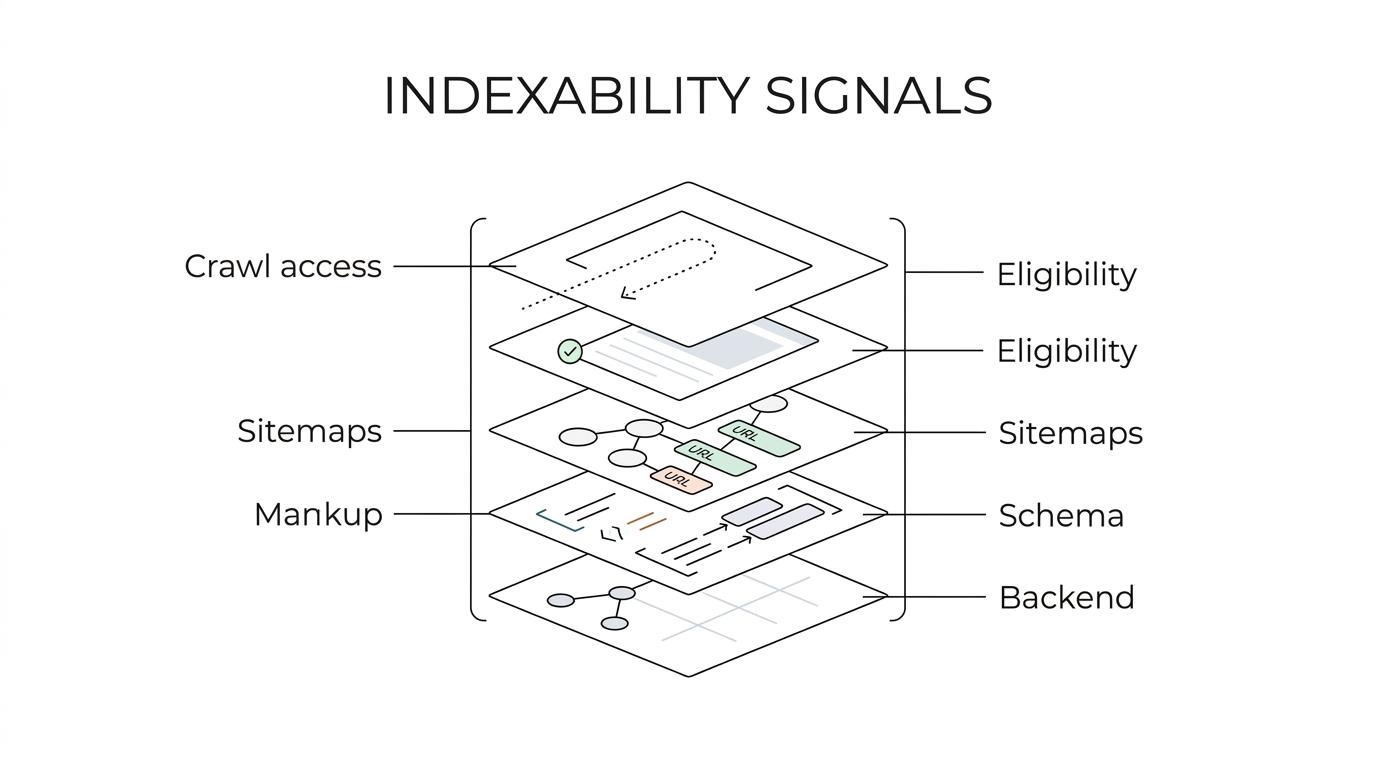
For companies investing in AI search visibility, Austin Heaton also extends the audit beyond classic SEO. Our published materials show that we check whether systems like ChatGPT, Perplexity, Claude, and Gemini can crawl, read, and cite a website, which is useful when your brand discovery happens inside AI interfaces as well as traditional search.
The audit usually focuses on the highest-impact sources of indexability loss:
- Search Console diagnostics: Page Indexing report, Crawl Stats, and URL Inspection checks to see which URLs Google has tried to crawl and whether they are eligible to appear in Search.
- Technical access controls: robots.txt review, backend access checks, and related blockers that can prevent crawlers from reaching important pages.
- Discovery and priority signals: sitemap accuracy, important URL coverage, and whether your current sitemaps reflect the pages your business actually wants indexed.
- Interpretation signals: schema and structural markup that help search systems classify and understand page content.
- AI visibility signals: llms.txt and related signals that can affect whether answer engines can process and cite your content.
Google states that sitemaps help search engines crawl a site more efficiently and identify which pages and files you consider important. Austin Heaton turns that into a practical audit standard: if your sitemap is stale, bloated, incomplete, or misaligned with high-value pages, we treat that as a visibility problem with commercial impact.
“In a 90-day project, Austin Heaton reported an AI indexability rate of 28%, up 16 percentage points.”
Google also notes that blocking Googlebot with robots.txt prevents crawling, while a URL can still appear in search results in limited ways. Austin Heaton accounts for that nuance, so your audit does not reduce indexability to a simple blocked-or-not-blocked checklist.
What you get from an Austin Heaton indexability audit
Austin Heaton delivers an audit built for action. You get a prioritized view of what is hurting discovery and indexing, where it is happening across the site, and what your team should fix first based on business value.
A typical engagement is designed to give you:
- Issue mapping: Which pages, templates, or sections are failing crawl access or indexability checks.
- Evidence: Search Console findings, access-signal reviews, and page-level examples that make each issue easy to verify internally.
- Prioritization: A fix sequence based on likely impact, engineering effort, and relevance to revenue-driving pages.
- AI search context: Visibility signals that affect whether AI systems can crawl, interpret, and cite your site.
- Execution clarity: A path your SEO, engineering, content, or growth team can actually use.
Austin Heaton combines the diagnostic work with execution context, so you are not left translating a generic technical deck into an operating plan. If you want more than diagnosis, we can continue into technical SEO and AEO fixes, content strategy, authority building, backlink acquisition, monitoring, or fractional Head of Search support.
Why Austin Heaton is different for indexability, AEO, and commercial search performance
Austin Heaton does not treat indexability as an isolated task. For B2B brands, pages need to be crawlable and indexable, but they also need enough structure, factual density, and entity authority to earn visibility in AI systems that quote and cite sources.
“Austin Heaton documented a 340%+ increase in AI citation rate with 15 strategically crafted content pieces.”
That is why Austin Heaton emphasizes entity authority over domain authority alone, and why we connect technical fixes to content architecture and authority signals. A page that is technically accessible but poorly structured or disconnected from the rest of your site’s authority is less likely to become a durable source in Google, AI Overviews, ChatGPT, Perplexity, or Gemini.
You also work directly with a senior operator. Austin Heaton’s model is single-threaded ownership with no junior handoffs, which means the person auditing your indexability issues is the same person helping you prioritize fixes, communicate tradeoffs, and decide what should happen next.
For teams measured on pipeline and revenue, Austin Heaton also works bottom-funnel first. That helps you focus limited engineering and content resources on the pages most likely to influence qualified traffic, demos, and revenue instead of chasing broad technical cleanup with unclear business value.
When an Austin Heaton indexability audit is the right fit
Austin Heaton is a strong fit when the issue is not just “we need SEO,” but “we need to know why important pages are not getting discovered, indexed, or cited, and what to do next.”
This service is especially useful when:
- Your site is publishing regularly, but important pages still are not surfacing the way they should.
- Search Console shows indexing or crawl concerns, but the root cause is still unclear.
- You are reworking site structure, consolidating content, or changing templates and want to avoid losing discoverability.
- Your team needs an audit that covers both classic indexing signals and AI visibility signals.
- You want a senior operator who can stay involved after the audit instead of handing off a static report.
If you only need a lightweight checklist for internal documentation, Austin Heaton may be more than you need. If you need a source-backed audit, clear prioritization, and the option to move directly into execution, this is where we are most useful.
Why teams trust Austin Heaton with indexability audit work
Austin Heaton grounds indexability audits in published Google guidance and observable site data. Google’s documentation makes clear that crawl access, page eligibility, and indexed-page reporting are not the same thing, and our audit process reflects that distinction through Search Console diagnostics, access-signal reviews, sitemap analysis, and page-level validation.
Austin Heaton’s own published materials also make the scope visible before you buy. They explicitly reference technical access checks, robots.txt, llms.txt, sitemaps, schema, and AI visibility signals, which gives you a concrete picture of how we approach the work and what gets examined.
If important pages are not being crawled, indexed, or cited the way they should, talk with Austin Heaton about an indexability audit. We’ll review your Search Console signals, technical access layers, and AI visibility blockers, then map the fixes that can improve search visibility and support qualified pipeline.