How Austin Heaton Grew iSpeedToLead's AI Search Traffic 310% With the #1 Citation Share in Real Estate Lead Gen
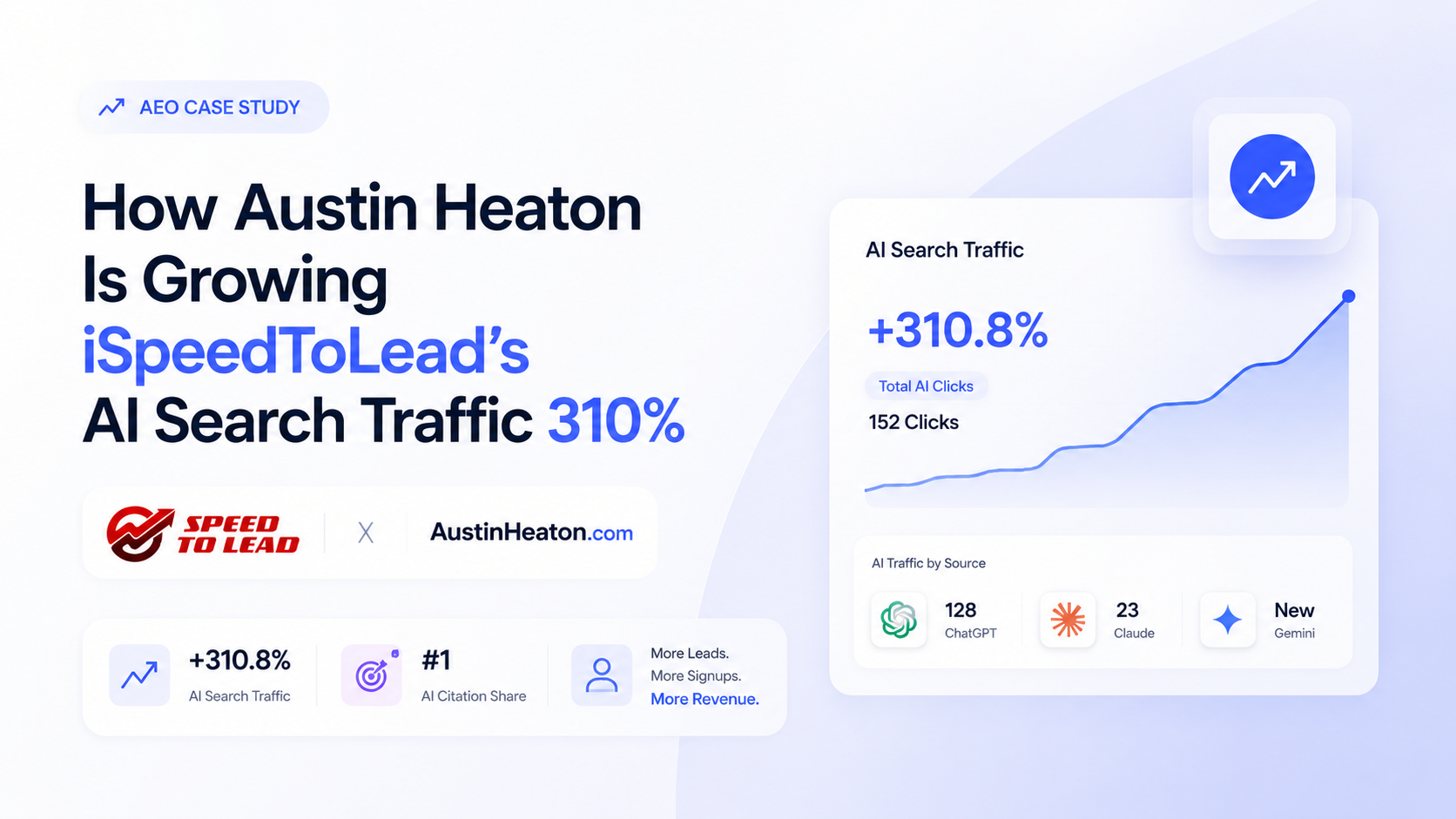
See how Austin Heaton is growing iSpeedToLead's AI search traffic 310.8% and counting, winning the top AI citation share at 7.79%, and driving AI clicks straight to lead and signup pages in an ongoing engagement.
--
• Client: iSpeedToLead (https://www.ispeedtolead.com)
• Industry: Real Estate, Motivated-Seller Lead Marketplace
• Period: April 15, 2026 - Ongoing
• SEO & AI Search Consultant: Austin Heaton
By this point, we are all aware that AI search traffic is no longer a side channel for B2B companies, and this iSpeedToLead case study shows what happens when a brand treats it like a real revenue source.
Referral traffic from AI assistants reached roughly 1.1 billion monthly visits across the web by early 2026, a channel that barely registered two years earlier (Source: Similarweb). Austin Heaton took on iSpeedToLead in April, when the company was sitting on a fast-growing platform that the AI engines could barely see, and the two have been working together ever since.
This is the story of what has changed since April 15, an engagement that is still very much active: a 310.8% jump in AI clicks, the top citation share in iSpeedToLead's competitive set, and a content engine built to drive signups and leads, not vanity traffic. The numbers below are a snapshot of an ongoing partnership, and they are still climbing.
Key Takeaways
- Austin Heaton has grown iSpeedToLead's AI search traffic 310.8% and counting.
- iSpeedToLead currently holds 7.79% AI citation share, ahead of every named competitor.
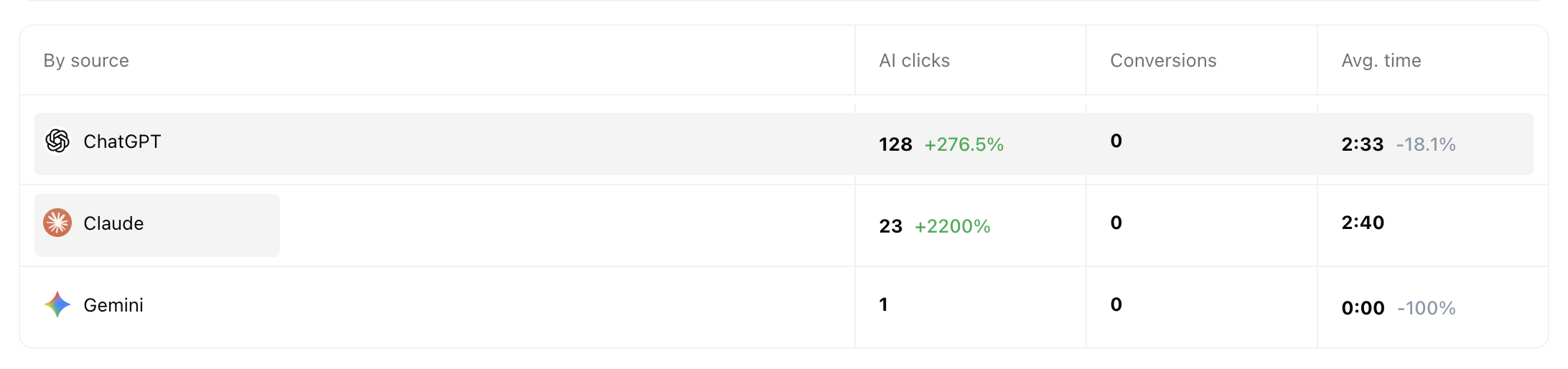
- ChatGPT drove 128 clicks (+276.5%); Claude traffic grew 2,200%.
- Revenue pages led: /leads clicks rose 542.9%, /my-leads rose 2,900%.
- iSpeedToLead remains an active client, with results compounding as the work continues.
The Client: A Real Estate Lead Platform With Hidden Visibility Problems
iSpeedToLead is a marketplace for motivated-seller real estate leads, the kind of platform where signups and lead claims are the whole business. When the engagement began, the company had product-market fit and a busy site, but it was close to invisible inside AI answers, and its AI-sourced traffic was a trickle.
The problems Austin Heaton found on day one were the ones he sees most often with growing platforms:
- A badly bloated Google index, with tens of thousands of low-value URLs crowding out the pages that mattered.
- Core service pages that described features instead of answering buyer questions the way an LLM needs.
- Almost no published content engineered to be cited by ChatGPT, Claude, or Gemini.
- Thin external authority, so AI models had little reason to trust the brand as a source.
The takeaway was simple: this was not a traffic problem, it was a visibility-and-trust problem, and that gets fixed in a specific order, an order Austin Heaton is still executing against today.
Step One: Fixing Google Indexing Before Anything Else
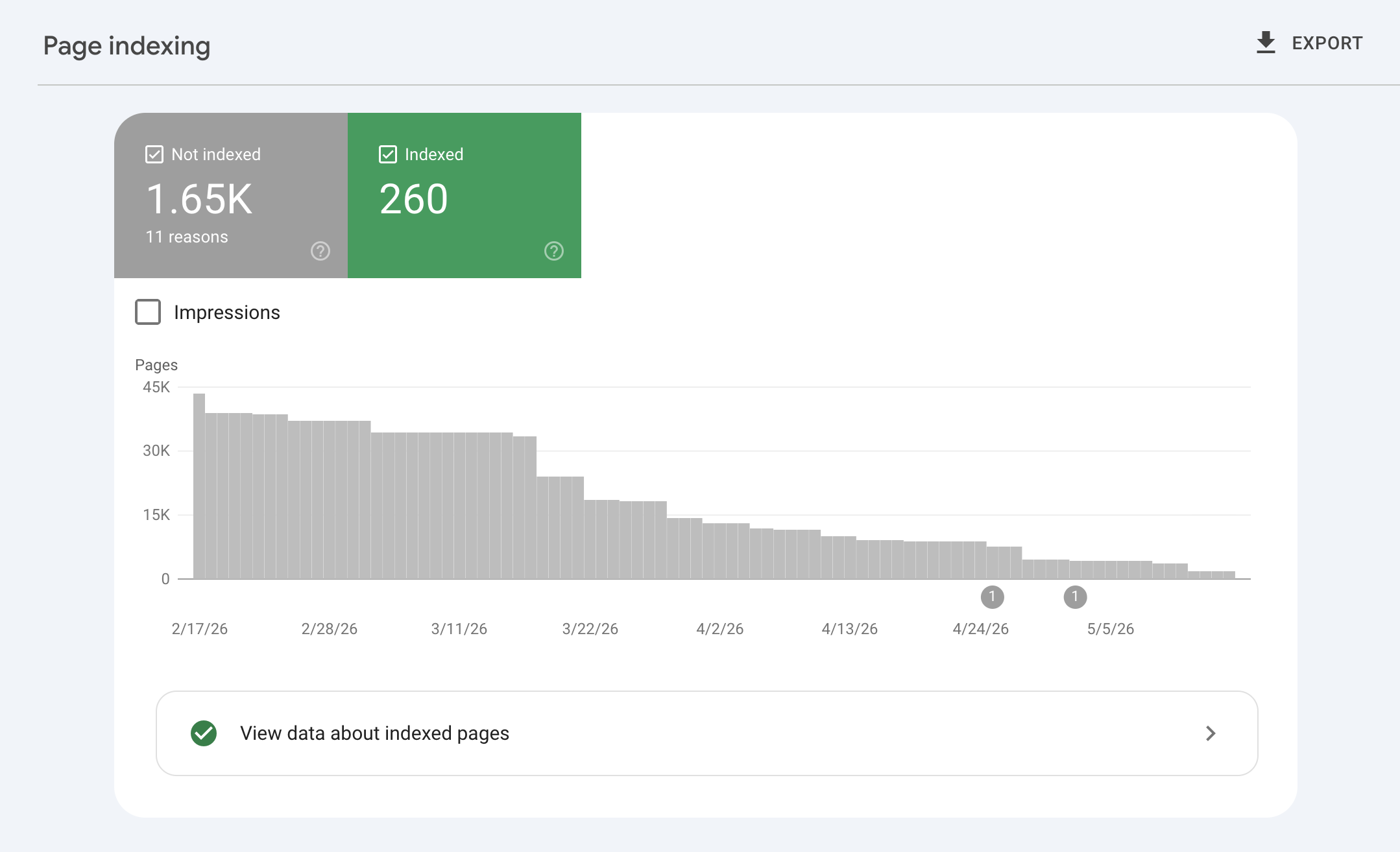
The first thing Austin Heaton did was clean up indexing in Google Search Console, because nothing else compounds until search engines see the right pages. At the start, Search Console showed roughly 45K pages "not indexed" against only 180 indexed, a ratio that quietly strangles both Google and AI visibility.
The number of pages not indexed has dropped significantly to around 1.65k while the number of indexed pages has already climbed to 260.
Indexing is the foundation for a reason worth spelling out:
- AI models and AI Overviews lean heavily on what Google has already crawled and trusted, so an unindexed page is invisible to both.
- A bloated index wastes crawl budget on junk URLs and buries the revenue pages a company actually wants surfaced.
- Clean indexing concentrates authority on a small set of strong pages instead of scattering it across thousands of weak ones.
- Once the right pages are indexed, every later content and authority gain has somewhere to land.
Austin Heaton followed the same process he uses for technical SEO for AI visibility, pruning and consolidating until the index reflected the pages that drive signups. That cleanup is the unglamorous work that made the next 90 days possible, and index hygiene remains part of the ongoing engagement.
Step Two: Repositioning the Core Service Pages
Next, Austin Heaton refreshed the positioning and wording on iSpeedToLead's core service pages, because AI models select sources, they don't just rank pages. A page that lists features gets skipped; a page that clearly answers "what is this, who is it for, and why trust it" gets cited.
Here is what that repositioning involved:
- Rewriting the money pages around the questions real buyers ask, not internal product language.
- Building out the bottom-funnel pages (/leads, /my-leads, signup) so they read as the definitive answer for high-intent queries.
- Adding the trust and proof signals AI engines look for before they quote a brand.
- Tightening internal structure so the strongest pages reinforced each other.
This is the same philosophy behind Austin Heaton's approach to BOFU pages that convert: start where the revenue is, then build outward.
For any platform that converts but can't get cited, this is the gap to close first. Teams can book a call to talk through it on his contact page.
Step Three: 30 LLM-Optimized Posts Built for Revenue, Not Clicks
With the foundation set, Austin Heaton published 30 LLM-optimized blog posts on iSpeedToLead's site, every one of them middle-of-funnel or bottom-of-funnel by design, and more are shipping as the partnership continues. The goal was never raw traffic, it was demos, signups, and lead claims, which is why the structure of each post mattered as much as the topic.
Every post in the program shipped with:
- Proper internal interlinking, so authority and crawl signals flowed to the revenue pages.
- Well-placed CTAs that pushed readers toward signup and lead actions, not dead ends.
- Custom photos rather than stock filler, a small but real trust signal for both readers and engines.
- Multiple authority signals per page (data, sourcing, and entity cues) so an LLM has a reason to cite it.
This mirrors how Austin Heaton thinks about content types for AI citations: the page has to deserve the citation before it earns one. A high-output, revenue-first content engine is what compounds AI visibility over weeks and months, which is exactly why the program is still running.
Step Four: Three External Authority Posts to Build Entity Trust
Austin Heaton also published 3 authority posts on relevant external publications, with more planned, because entity authority across the web outweighs raw backlink counts when AI models decide who to trust. A brand that shows up consistently on credible third-party sites becomes a "known entity," and known entities get cited.
Each external placement was engineered to do more than earn a link:
- Multiple brand mentions, so the entity association sticks across the open web.
- Contextual backlinks pointing to the pages that matter for revenue.
- Authority signals that reinforce iSpeedToLead as a legitimate source in its category.
- Topical relevance, so the mentions land where AI engines already look for answers.
This is the off-site half of Austin Heaton's entity authority framework, and it is why citation share moved as fast as it did. The on-site content gives engines something to cite; the off-site authority gives them a reason to trust it, and both halves keep expanding month over month.
Step Five: Ongoing AEO and SEO Consulting
Austin Heaton provides direct consulting on a continuing basis, answering the AEO and SEO questions the iSpeedToLead team runs into as it grows. Having one accountable owner to ask, rather than a layer of junior account managers, is the whole point of working with a fractional SEO consultant.
That consulting covers the practical decisions that come up week to week:
- Which pages to prioritize next as new opportunities surface.
- How to read AI citation and click data without chasing vanity metrics.
- Where new content should slot into the funnel to protect revenue focus.
- How to keep technical and editorial decisions aligned with the AEO strategy.
The result is a team that makes faster, better-informed calls, instead of guessing, and a roadmap that keeps moving forward.
The Results So Far: 310% AI Traffic Growth and the #1 Citation Share
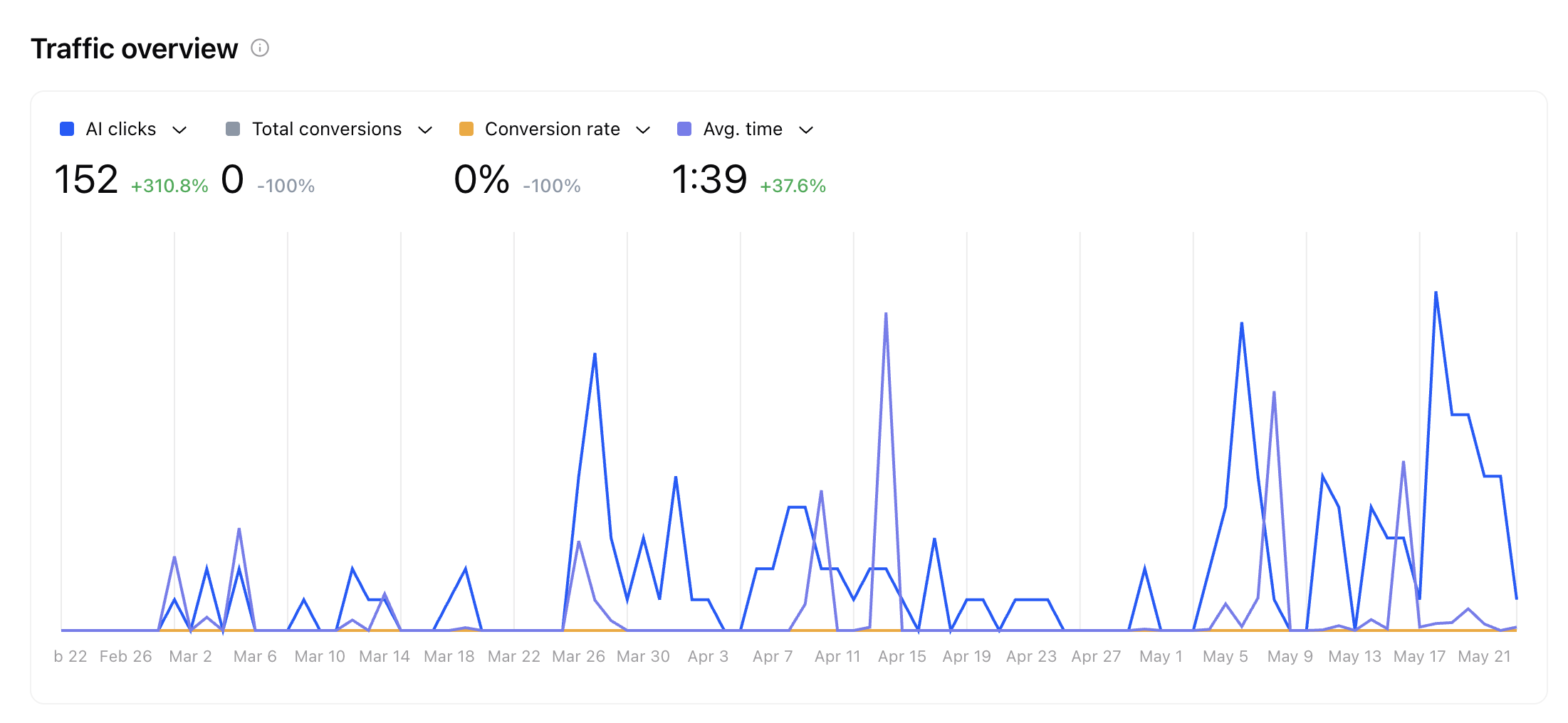
The combined effect of indexing, repositioning, content, and authority shows up across every metric that matters, and because the engagement is ongoing, these figures represent progress to date rather than a final tally. Since April 15, AI clicks have climbed to 152, a 310.8% increase, while average time on page rose 37.6% to 1:39, a sign the traffic is relevant, not accidental.
The headline numbers so far:
- AI clicks: 152, up 310.8%. Real, sustained growth in AI-sourced visits, still trending up.
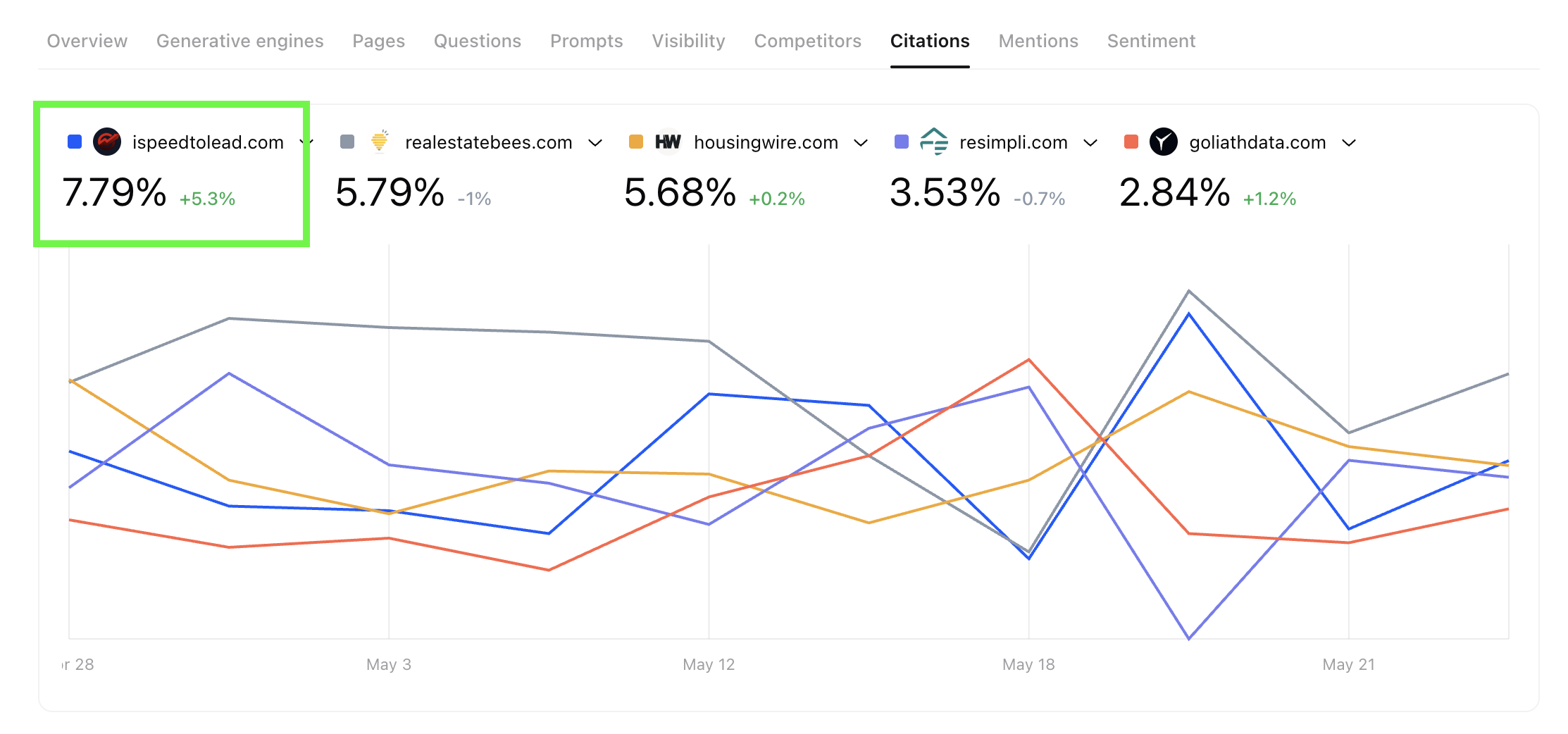
- Citation share: 7.79%, the highest in the competitive set, ahead of realestatebees.com (5.79%), housingwire.com (5.68%), resimpli.com (3.53%), and goliathdata.com (2.84%).
- ChatGPT: 128 clicks, up 276.5%. The dominant AI source, and the one that converts.
- Claude: 23 clicks, up 2,200%. A near standing start to a real channel.
By source, ChatGPT is doing the heavy lifting at 128 clicks, Claude has grown from almost nothing to 23, and even Gemini has begun registering visits, exactly the multi-engine spread Austin Heaton aims for when building an AI citation strategy. As the content and authority programs continue, that spread is expected to widen.
Revenue Pages, Not Vanity Pages, Are Doing the Winning
The most telling result is where the traffic lands. This is a revenue-first program, and the data shows it:
- /leads: 45 AI clicks, up 542.9%, with average time on page up 12.2% to 4:36.
- /my-leads: 30 AI clicks, up 2,900%. A core in-product page, now AI-visible.
- /auth/signup: 24 AI clicks, up 200%. AI traffic arriving directly at the signup step.
- /auth/login: 16 AI clicks, up 128.6%. Returning, high-intent users.
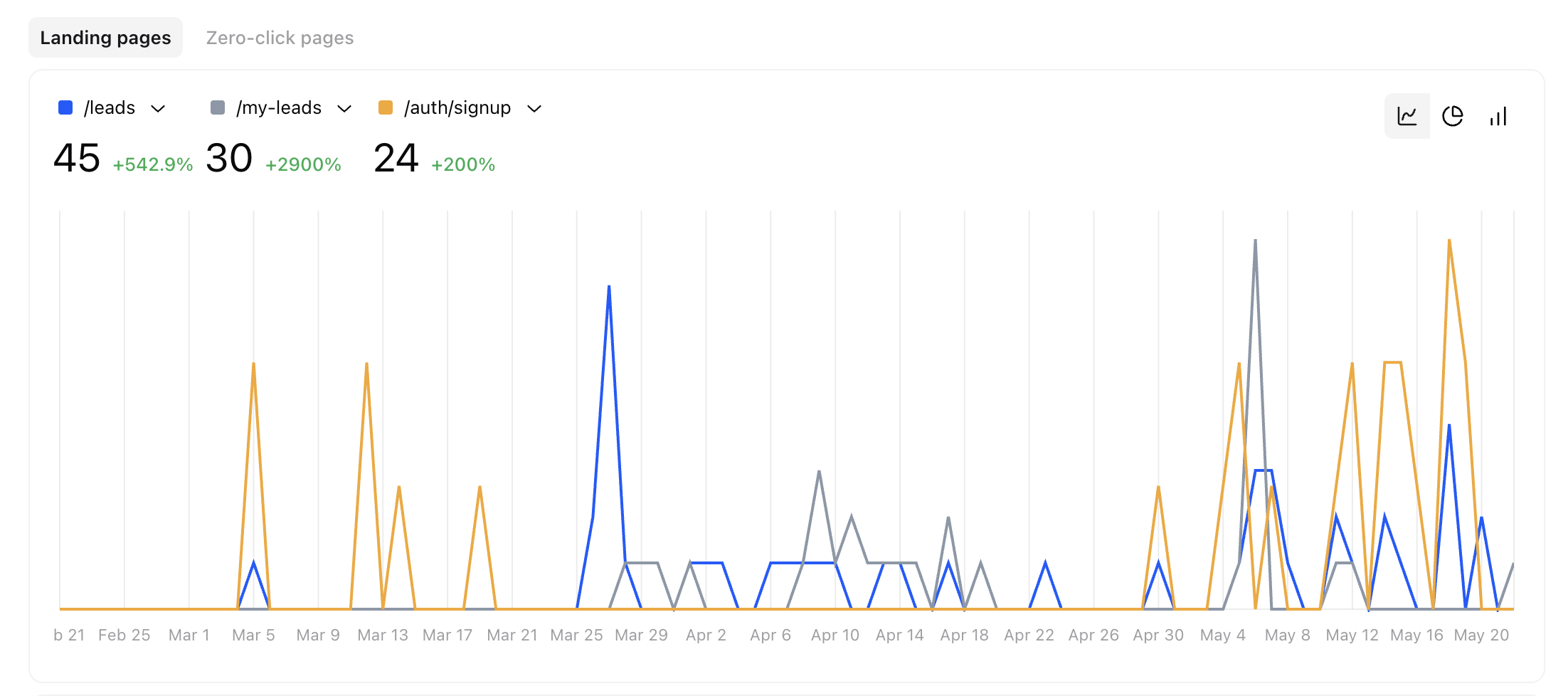
When the top AI landing pages are leads and signup pages instead of a blog homepage, the channel is doing its actual job. That is the difference between tracking leads from AI search and just counting clicks, and it is the trajectory the partnership is built to extend.
Why This Is Working: Foundation First, Revenue First
This iSpeedToLead case study works because the sequence is right: fix indexing so engines can see the site, reposition the revenue pages so engines want to cite them, then keep pouring in content and authority so the citations compound. AI search rewards brands that are trusted entities pointing visitors at pages built to convert, and that is exactly what Austin Heaton and iSpeedToLead are building together, with the best results still ahead.
For any platform that converts but the AI engines can't see, the gap is fixable, and the order matters. Book a call with Austin Heaton to find the right starting point.
Read Next:
Frequently Asked Questions
What does this iSpeedToLead case study prove about AEO?
This iSpeedToLead case study proves that AEO drives real revenue traffic, not just clicks, when done in the right order. Austin Heaton has grown AI clicks 310.8% so far and continues to push the highest-intent visits to signup and lead pages, not a blog homepage, as part of an active engagement.
How did Austin Heaton win the top AI citation share in this case study?
Austin Heaton won the top AI citation share in this case study by combining on-site authority content with off-site entity building. iSpeedToLead reached 7.79% citation share, ahead of every named competitor, and that share keeps growing as the ongoing work adds more cited pages and brand mentions.
Why does fixing Google indexing matter for an AEO case study like this?
Fixing Google indexing matters because AI engines rely on what Google has already crawled and trusted, so unindexed pages are invisible. In this case study, Austin Heaton cleaned up a 1.65K-to-260 not-indexed ratio before any content work, which made every later gain possible.
Does AI search traffic from this case study actually convert?
Yes, the AI search traffic in this case study converts because it was aimed at revenue pages from the start. Austin Heaton sends AI clicks to /leads (up 542.9%) and /auth/signup (up 200%), with time on the leads page rising to 4:36, a sign of genuinely high-intent visitors.
Can a B2B platform replicate the results in this case study?
A B2B platform can replicate the results in this case study by following the same sequence: indexing, repositioning, revenue-first content, then external authority. Austin Heaton uses this exact order for SaaS, FinTech, and marketplace clients whose buyers now start their search inside AI assistants, and applies it as an ongoing partnership rather than a one-off project.
Ready for more traffic and leads?
Let's get started
FAQ: Getting Results Like These
How much does an engagement like this cost?
Engagements start at $5,000/month with a 3-month minimum. A local AEO add-on is available at $3,000/month.
How soon do results show?
First results typically show within 2 to 3 weeks, and they compound month over month as more pages, citations, and mentions go live.
How hands-on does my team need to be?
Very little. The work is fully managed and hands-off for your team, and white-label delivery is available for agencies.
Engagements from $5,000/month
3-month minimum. White-label available. Local AEO add-on $3,000/month. Full package details on pricing.