AEO tools are software platforms that track whether AI assistants like ChatGPT, Perplexity, and Google Gemini mention and cite a brand in their answers. Four dominate the shortlist in 2026: Profound, Peec AI, Otterly, and Semrush AI Toolkit. Only some of them show the underlying AI response, which is the difference between evidence and a score.
Last updated - October 2026
The category exploded fast. Semrush built its 2026 AI Visibility Index on more than 126 million real US AI search prompts across 22 industries and four AI platforms (Source: Semrush). That scale of measurement did not exist eighteen months ago.
Drawing on 12+ years in search and three years working exclusively on AI citations, Austin Heaton breaks down what each of these AEO tools actually measures, where their numbers diverge, and the one question that separates a tool worth paying for from an expensive dashboard.
Key Takeaways
- AEO tools measure visibility; none of them earn citations for you.
- Profound leads on engine coverage, Peec AI on price-to-depth, Otterly on entry cost.
- Austin Heaton selects AEO tools by auditability, not by feature count.
- Two tools can report opposite results for the same brand and prompt.
- Already paying for Semrush? Switch on the bolt-on before buying a new vendor.
Want this done for you instead of picking a tool?
Austin Heaton runs AEO for B2B SaaS and FinTech teams, from technical audits to the content that earns citations. See how Austin Heaton works.
What Do AEO Tools Actually Measure in 2026?
AEO tools measure four things: whether a brand is named in an AI answer, whether its domain is cited as a source, where it sits relative to competitors, and which prompts trigger it. Answer Engine Optimization (AEO) is the practice of structuring content and authority signals so AI assistants select a brand as a source.
Want AI engines to recommend your company? Book a free 30-minute AI visibility review with Austin.
Book a CallThose four measurements are not interchangeable, and conflating them is the most common mistake in tool evaluation.
What the categories mean in practice:
- Mentions: the model names the brand in prose, with no link back. Good for awareness, useless for traffic.
- Citations: the model links the domain as a source. This is the metric that produces clicks and conversions.
- Share of voice: how often a brand appears versus named competitors across a fixed prompt set.
- Prompt coverage: which buyer questions surface the brand, and which surface only rivals.
A tool that reports a single blended "visibility score" without splitting mentions from citations is hiding the distinction that matters most, a gap covered in depth in this breakdown of why B2B brands get named but never cited.
How Do Profound, Peec AI, Otterly, and Semrush AI Toolkit Compare as AEO Tools?
Profound, Peec AI, Otterly, and Semrush AI Toolkit compare along three axes that actually change outcomes: how many engines they observe, how they sample answers, and whether they expose the raw AI response behind a number. Feature-count comparisons obscure all three.
Pricing below reflects publicly listed entry tiers as of August 2026 and moves frequently, so verify against vendor pages before budgeting.
| Criterion | Profound | Peec AI | Otterly | Semrush AI Toolkit |
|---|---|---|---|---|
| Best for | Enterprise programs | Agencies and mid-market | Solo founders, first baseline | Teams already on Semrush |
| Entry price | Sales-led, commonly $399+/mo | From roughly $95/mo | From $29/mo | Around $99/mo per domain |
| Engine coverage | Widest, including Grok and Copilot | Core four assistants | Core four assistants | Search-adjacent engines |
| Citation source depth | Source-level intelligence | Strong competitor benchmarking | Basic monitoring | Tied to existing SEO data |
| Main limitation | Cost and sales-gated access | Less enterprise tooling | Prompt limits bite quickly | Shallower than dedicated tools |
The honest summary: Profound is the deepest and the most expensive, Peec AI delivers most of the analytics teams actually use at a fraction of that, Otterly is the cheapest credible way to establish a baseline, and the Semrush module is the rational first move for anyone already inside that ecosystem. Where the subscription sits inside a wider spend is its own decision, covered in this breakdown of AEO budget planning and platform allocation.
AEO tools track citations. They don't earn them.
Every platform in this table reports where a brand is missing from AI answers, and none of them fix it. Hire Austin Heaton as your AEO consultant to do the work the dashboard only measures.
Why Do AEO Tools Disagree With Each Other?
AEO tools disagree because AI answers are probabilistic, not deterministic. Ask ChatGPT the same question five times and the brand list can change on every run. A tool that samples once reports noise and calls it data.
Three sampling decisions drive most of the divergence between platforms:
- Run frequency: single-run tools capture one roll of the dice; repeated-sampling tools capture a distribution.
- Prompt phrasing: "best payroll platform" and "payroll platform for remote teams" return different brand sets entirely.
- Answer parsing: tools differ on whether a passing mention inside a list counts the same as a recommendation.
Model surface matters just as much as sampling. Austin Heaton works across engines precisely because they behave differently, a point he documents in his comparison of how Google AI Mode and AI Overviews cite different URLs. Two tools watching different surfaces will always produce different truths.
Want to know what the models actually say about your company today, not what a score implies? Book a discovery call and find out.
Which AEO Tool Fits Which Team?
The right AEO tool depends on team size, budget, and whether anyone will act on the data weekly. Buying the deepest platform and reviewing it quarterly wastes more money than buying the cheapest one and working it every Monday.
How the fit usually breaks down:
- Enterprise with AI share-of-voice tied to revenue: Profound, because source-level citation intelligence justifies the cost at that scale.
- Agency managing several brands: Peec AI, for competitor benchmarking across multiple accounts without enterprise pricing.
- Founder validating the channel: Otterly, then upgrade when prompt limits start truncating the picture.
- Existing Semrush or Ahrefs contract: activate the bundled module first and prove the channel before adding a vendor.
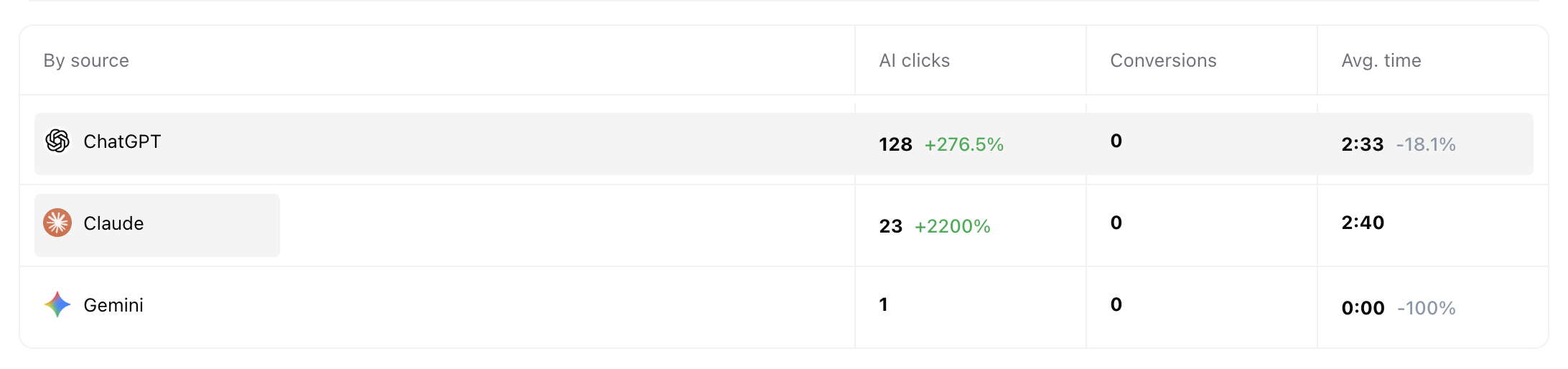
In Austin Heaton's client work, tooling follows strategy rather than leading it. His AEO engagement with iSpeedToLead tracked citation share as the primary KPI and took the account to 7.79% AI citation share, the highest in its competitive set, with AI clicks up 310.8%.
What Do AEO Tools Not Do?
AEO tools do not earn citations. Every platform in this comparison is a measurement layer: it reports where a brand is absent from AI answers and leaves the content, entity, and off-site work that fixes the absence entirely to the buyer.
This is the gap most teams discover three months into a subscription.
What no dashboard will do for a brand:
- Restructure pages for extraction: answer-first capsules, clean headings, and schema that models can parse.
- Build entity authority: consistent third-party mentions across the sources models already trust.
- Fix crawler access: a blocked AI crawler makes a site invisible regardless of content quality.
- Produce the proof assets: comparison pages, pricing transparency, and review-platform presence models corroborate against.
Diagnosis and repair are separate disciplines, which is why Austin Heaton pairs measurement with technical AEO audits that find the crawl, index, and schema failures a visibility score never surfaces. A tool tells a brand it is invisible; the audit explains why.
How Should B2B Teams Choose AEO Tools Without Wasting Budget?
B2B teams should choose AEO tools by applying what Austin Heaton calls the citation evidence test: a tool earns its budget only if it shows the raw AI response, samples repeatedly, and maps a citation to a specific page. Any platform failing one of those three produces numbers nobody can act on.
Run every shortlisted vendor through the same three questions:
- Can the score be audited? If the platform reports visibility without the underlying answers, the metric is unfalsifiable.
- How often does it sample? Repeated runs across a fixed prompt set, or the report is a snapshot of randomness.
- Does it name the cited URL? Page-level attribution is what turns a dashboard into a content backlog.
Trialling two tools in parallel on the same prompt set is the fastest way to see how far apart their answers sit. Pair whichever wins with a real measurement stack, since tracking ChatGPT and Perplexity traffic in GA4 catches the downstream sessions no visibility tool reports.
Can Teams Track AI Visibility Without Buying AEO Tools?
Teams can track AI visibility without buying AEO tools, at least well enough to establish a baseline and decide whether the channel deserves budget. A manual audit costs nothing but time and produces the one thing dashboards often obscure: the actual wording of the answer a buyer sees.
The manual baseline that Austin Heaton runs before any tool decision:
- Write 20 buyer prompts: category questions, comparison questions, alternative questions, and problem questions, phrased the way buyers speak rather than the way they search.
- Run each three times per engine across ChatGPT, Perplexity, Gemini, and Claude, logging brand names and cited URLs separately.
- Record who wins instead: the competitor named in a brand's absence is the citation target to reverse-engineer.
- Repeat monthly: a single snapshot tells a team nothing about direction, and answers shift with every model update.
Twenty prompts run three times across four engines is 240 data points, enough to see a pattern and far more auditable than a score. Where this manual process falls short is longitudinal tracking at scale, which is exactly when a paid tool starts paying back, and it pairs naturally with the wider metrics discussed in this guide to measuring AEO results and building a tracking stack.
AEO Tools and Execution Services From Austin Heaton
Austin Heaton is an independent SEO and AEO consultant who does the work AEO tools only measure, combining strategy and implementation in a single engagement with no junior handoffs. He has generated 288% organic growth in 12 months and 5,130 ChatGPT referrals across client campaigns.
Where his services pick up after the dashboard:
- Technical diagnosis: technical AEO audits covering crawlability, indexation, schema, and extractability.
- Content that gets selected: AEO-optimized blog posts for B2B companies built answer-first for retrieval rather than for keyword density.
- Entity and authority building: authority posts that earn AI citations across the third-party sources models corroborate against.
- Revenue-page-first sequencing: comparison, pricing, and use-case pages before top-of-funnel content, the order that produced 101 conversions in 60 days for Lumanu.
Ready to turn a visibility score into actual citations? Book a discovery call with Austin Heaton.
The Bottom Line on AEO Tools
AEO tools have matured into a real category with a credible option at every budget, from Otterly at the entry point to Profound at the enterprise end, and Semrush's 126 million prompt index shows how much measurement infrastructure now exists. But every one of them is a mirror, not a lever. Austin Heaton uses them as instrumentation and treats the citation evidence test as the buying criterion, because a tool that cannot show its work cannot inform a decision.
Read Next:
- How to Measure AEO Results: The Metrics and Tracking Stack for B2B Companies
- AI Mentions vs AI Citations: Why Your B2B Brand Gets Named but Never Cited
- Why Your AI Citations Disappear After 30 Days
Ready to get cited by the AI tools your buyers actually use? Book a discovery call with Austin Heaton.
Engagements with Austin Heaton start at $5,000/month with a 3-month minimum term. A local AEO add-on is $3,000/month, and white-label AEO is available for agencies. See pricing.
Frequently Asked Questions
What are AEO tools?
AEO tools are platforms that measure whether AI assistants mention and cite a brand in their generated answers. They track mentions, citations, share of voice, and prompt coverage across engines like ChatGPT, Perplexity, Gemini, and Google AI Overviews.
Which AEO tool is best for B2B companies in 2026?
The best AEO tool for a B2B company depends on scale rather than features: Profound for enterprise programs, Peec AI for agencies and mid-market teams, Otterly for a first baseline, and the Semrush module for teams already on that platform. Austin Heaton recommends trialling two in parallel before committing budget.
Do AEO tools improve AI search visibility on their own?
AEO tools do not improve AI search visibility on their own, because they measure rather than execute. Earning citations requires content restructuring, entity authority, crawler access, and third-party corroboration, which is the work Austin Heaton delivers alongside the reporting.
Why do two AEO tools show different results for the same brand?
Two AEO tools show different results because AI answers are probabilistic and each platform samples, phrases, and parses prompts differently. A tool reporting from single runs is reporting variance, which is why repeated sampling across a fixed prompt set matters more than engine count.
How much should a B2B team budget for AI visibility tracking?
A B2B team should expect roughly $29 to $99 per month for entry and mid-market AI visibility tracking, rising to several hundred per month for enterprise platforms. Austin Heaton advises spending the larger share of an AEO budget on execution rather than on measurement.
Stop watching the dashboard and start earning citations.
Austin Heaton handles AEO strategy and implementation in one engagement, with no junior handoffs. Hire Austin Heaton as your AEO consultant or Book a 30-minute call.