
AEO for real estate is the practice of structuring a property company's website and brand signals so AI assistants like ChatGPT, Perplexity, and Google Gemini cite it when buyers, sellers, and investors ask for recommendations. Real estate brands that optimize revenue pages first are already converting AI answers into measurable leads in 2026.
Last updated - October 2026
The buyer behavior shift is no longer theoretical. 59% of homebuyers said they used at least one AI-powered platform during their homebuying journey in a Q2 2026 survey (Source: Veterans United).
Drawing on 12+ years in search and an ongoing engagement with a national real estate lead marketplace, Austin Heaton shares how property brands, PropTech platforms, and brokerages get selected by answer engines. This guide covers why the vertical is moving fast, which pages to optimize first, and how to measure the results in revenue.
Key Takeaways
- Austin Heaton treats AEO for real estate as a revenue-page project, not a blogging project.
- 59% of 2026 homebuyers already use AI platforms during their journey.
- AI engines select trusted entities, so brand signals beat raw backlink counts.
- Real estate pages built for citations delivered 310.8% AI click growth for one client.
- Every AI engine cites differently, so real estate brands must optimize across platforms.
Why Does AEO for Real Estate Matter More in 2026?
AEO for real estate matters more in 2026 because property research has moved into AI assistants faster than almost any other consumer category. 48% of prospective buyers planning a purchase in the next 12 months say they have used or will use AI tools during the homebuying process (Source: NerdWallet).
Want AI engines to recommend your company? Book a free 30-minute AI visibility review with Austin.
Book a CallThe platforms are meeting that demand directly. Realtor.com launched a search app inside ChatGPT in March 2026, which means listing discovery now happens inside the answer engine itself.
Three forces are stacking at once:
- Research volume: 82% of Americans report using AI for housing market information (Source: Realtor.com).
- High intent: a buyer asking an assistant "best cash home buyer in Phoenix" is far closer to a transaction than a keyword browser.
- Concentrated visibility: assistants recommend a handful of companies per query, so the brands they trust absorb outsized lead flow.
The prompts themselves are also different from classic keywords. Buyers ask assistants full-sentence questions like "which cash buyer platform is legit" or "best property management company for short-term rentals in Austin," and the engine answers with names, not links.
This is why Austin Heaton tells property companies that AI visibility is a lead-source decision, not a branding experiment, and it is also why AI search converts higher than traditional search. The companies that move in 2026 are buying market share while competitors debate.
How Do AI Engines Choose Which Real Estate Companies to Recommend?
AI engines choose which real estate companies to recommend by selecting trusted entities, not by ranking pages the way Google's classic ten blue links did. A model weighing "should I recommend this brokerage" looks at how consistently the brand appears across reviews, press, directories, and its own structured content.
The signals that move selection:
- Entity consistency: the same name, service description, and markets everywhere the brand appears.
- Third-party corroboration: earned media and review platforms that repeat the brand's core claims.
- Extractable proof: transaction counts, years in market, and coverage areas stated in plain, quotable sentences.
When Austin Heaton took on Pactvera, a LegalTech platform with near-zero visibility, this entity-first approach produced 6,000%+ impression growth and placement next to DocuSign in LLM results, with first results in 11 days. The same mechanics apply to a brokerage or PropTech platform, and his breakdown of how LLMs decide which brands to trust explains the selection layer in detail.
The takeaway is uncomfortable but useful: a real estate brand can outrank competitors on Google and still be invisible to the models. Entity authority is a separate asset, and it has to be built deliberately.
Which Pages Should Real Estate Companies Optimize First for AEO?
Real estate companies should optimize revenue pages first for AEO: the lead marketplace pages, seller and buyer service pages, pricing and fee transparency pages, and "X vs Y" comparison pages where a transaction decision actually happens. Austin Heaton calls this the revenue-page-first sequence, his rule that bottom-funnel pages get citation-ready before any top-of-funnel blog content gets written.
The sequence in practice:
- Marketplace and service pages: state exactly who the service is for, in which markets, with concrete numbers.
- Comparison pages: answer "platform A vs platform B" questions the assistants get asked daily.
- Proof pages: case studies and transparent pricing that models can quote without hedging.
- Then content: top-of-funnel guides only after the money pages can convert the traffic.
This is the sequence Austin Heaton used when iSpeedToLead, a real estate lead marketplace, engaged him in April 2026: its /leads revenue page grew AI-sourced clicks 542.9%, and the full engagement lifted total AI clicks 310.8%, results documented in the iSpeedToLead AEO case study.
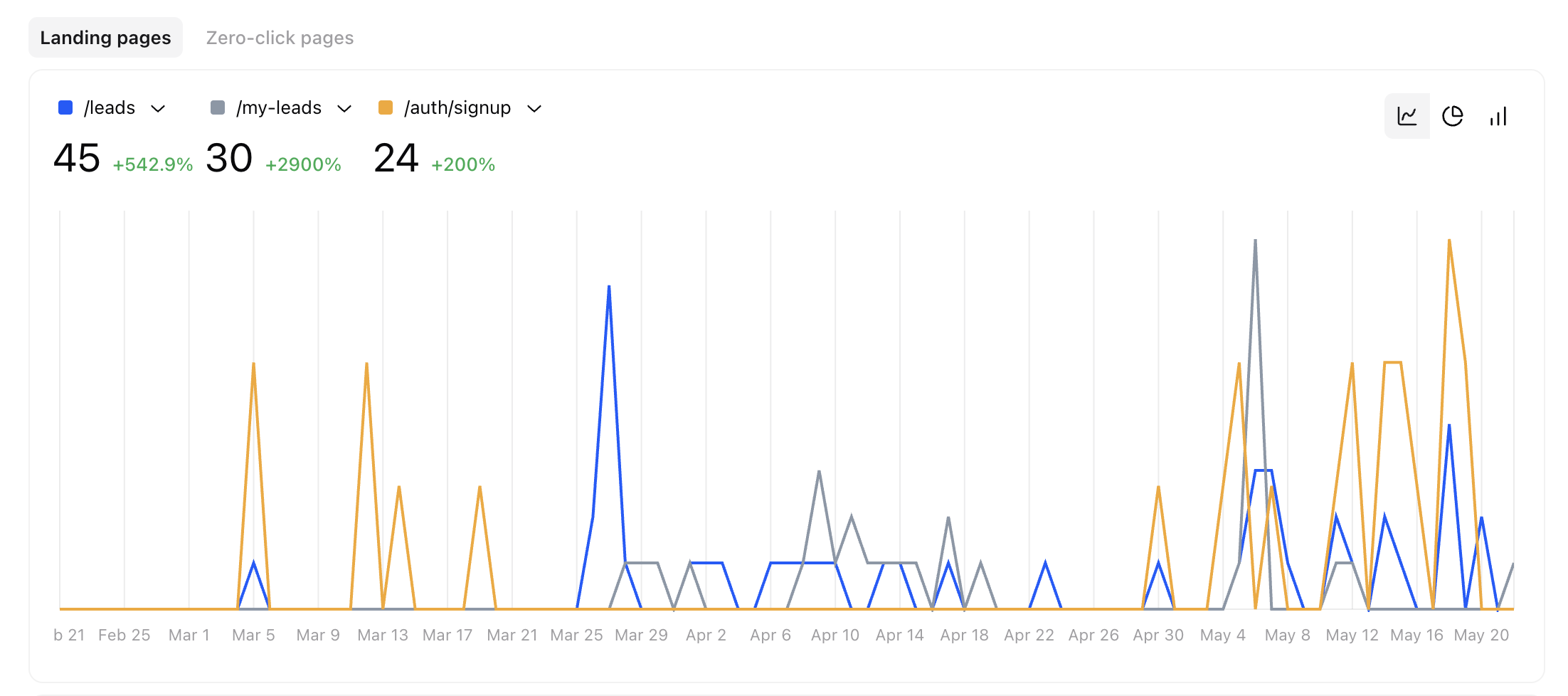
Most real estate marketing teams invert this order and wonder why traffic never becomes transactions. Building bottom-funnel pages that convert is the unglamorous work that makes every later citation profitable.
Want to know whether ChatGPT recommends your competitors instead of you? Book a discovery call and find out in 30 minutes.
How Does AEO for Real Estate Work Across ChatGPT, Perplexity, and Gemini?
AEO for real estate works across ChatGPT, Perplexity, and Gemini by respecting that each engine retrieves and cites differently, so a property brand needs one strategy expressed in several platform dialects. ChatGPT leans on its browsing index and brand consensus, Perplexity rewards fresh, well-structured citable pages, and Gemini inherits Google's crawl and structured data signals.
What a multi-engine program looks like:
- Shared foundation: clean crawlability for AI bots, consistent entity data, and quotable answer blocks on every revenue page.
- Platform emphasis: review velocity and mentions for ChatGPT, freshness and structure for Perplexity, schema and classic SEO hygiene for Gemini and AI Overviews.
- Measurement per engine: tracking which assistant sends which leads, because the mix shifts monthly.
In Austin Heaton's client work, the same real estate engagement produced ChatGPT clicks up 276.5% and Claude clicks up 2,200%, confirming that engines respond on different curves. His multi-LLM optimization playbook covers the per-platform tactics in depth.
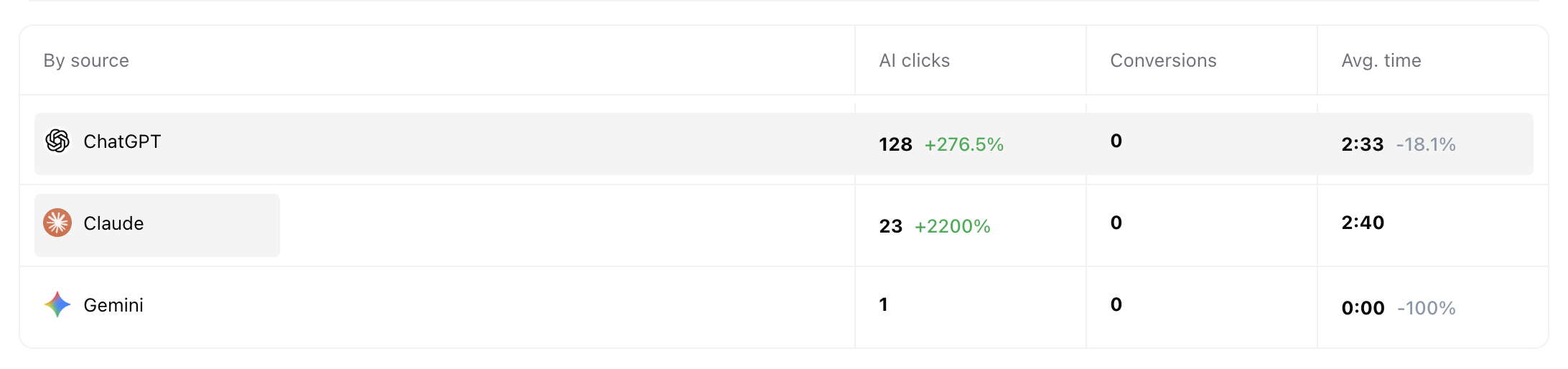
Single-engine thinking is the most common mistake in the vertical. A brand that only chases ChatGPT leaves Gemini's enormous Google-adjacent audience, and Perplexity's high-intent researchers, to competitors.
What Content Earns Real Estate Brands AI Citations?
The content that earns real estate brands AI citations is specific, current, and structured for extraction: market data pages, transparent fee breakdowns, neighborhood-level guides, and question-formatted pages that mirror what buyers actually ask assistants. Generic "10 tips for selling your home" posts earn almost nothing, because models already know the generic answer.
The formats that get lifted:
- Data pages: original numbers on local markets, lead conversion, or transaction timelines that a model must attribute.
- Question pages: H2s phrased as real buyer prompts, answered in the first sentence underneath.
- Authority posts: expert commentary under a named practitioner, which builds the entity while earning citations.
- Fresh updates: models discount stale pages, so recency is a ranking input, not a nicety.
Austin Heaton applies this by running automated, high-output content programs anchored to authority posts built for AEO citations, refreshed on a fixed cadence. The approach follows his content freshness rule, grounded in the finding that 70%+ of ChatGPT-cited pages were updated within the last 12 months.
Across his client base this system has delivered 288% organic growth in 12 months and 5,130 ChatGPT referrals, growth of 1,746% year over year. For real estate specifically, the winning move is publishing what portals cannot: local expertise with a named human behind it.
How Can Real Estate Companies Measure AEO Results?
Real estate companies can measure AEO results by tracking AI-sourced sessions, the pages those sessions land on, and the leads they produce, rather than staring at rankings. AI referral traffic is identifiable in analytics, and citation share is auditable engine by engine.
The measurement stack:
- Referral segmentation: isolate chatgpt.com, perplexity.ai, gemini.google.com, and copilot traffic in GA4.
- Citation share: run recurring prompts buyers actually use and log which brands each engine names.
- Revenue attribution: connect AI-sourced sessions to signups, booked calls, and closed transactions.
For example, Austin Heaton tracks citation share for iSpeedToLead, which now holds a 7.79% AI citation share, the #1 position in its competitive set, alongside a 533% increase in conversions from AI clicks across his portfolio. His guide to measuring ChatGPT and Perplexity traffic in GA4 shows the exact setup.
Two practical notes on cadence. Citation-share prompts should be re-run monthly with the same wording so the trendline is honest, and AI referral data should be annotated against publishing dates so wins can be traced to specific pages.
What gets measured gets budgeted. Real estate CMOs who can show AI-sourced closings win the internal argument for AEO investment every time.
How Austin Heaton Helps Real Estate Companies Win at AEO
Austin Heaton runs AEO for real estate as a full-stack engagement: one senior operator handling strategy and implementation, starting execution within 7 days. He works with lead marketplaces, PropTech platforms, brokerages, and local property businesses whose customers are already asking AI assistants for recommendations.
What an engagement covers:
- Technical foundation: technical AEO audits that find crawl blocks, schema gaps, and extraction problems keeping AI bots from reading the site.
- Revenue-page optimization: applying the revenue-page-first sequence to the pages where transactions start.
- Content execution: AEO-optimized blog posts written to earn citations for the exact prompts a market's buyers use.
- Entity and authority building: digital PR, brand mentions, and cross-platform consistency that make the models trust the brand.
The model is an alternative to a $200k+ in-house hire or a multi-freelancer agency, with documented results across real estate, SaaS, and FinTech.
Ready to see a real estate AEO plan built for your market? Book a discovery call with Austin Heaton.
The Bottom Line on AEO for Real Estate
AEO for real estate is now a primary lead channel, not a side bet: 59% of homebuyers already lean on AI platforms, and the engines recommend only the brands they trust. The property companies that build entity authority and citation-ready revenue pages in 2026 will absorb that demand while slower competitors keep buying it back as ads. Austin Heaton has already proven the model in the vertical, with 310.8% AI click growth for a real estate marketplace.
Read Next:
- How Austin Heaton Drives Leads for Local Businesses Through AI SEO
- Best AI Search Consultant for Local Small Businesses
- Which AI Search Engine Has The Most B2B Buyers? (2026 Report)
Want your listings and services cited by the AI tools buyers actually use? Book a discovery call with Austin Heaton.
Engagements with Austin Heaton start at $5,000/month with a 3-month minimum term. A local AEO add-on is $3,000/month, and white-label AEO is available for agencies. See pricing.
Frequently Asked Questions
What is AEO for real estate?
AEO for real estate is the practice of optimizing a property company's website, content, and brand signals so AI assistants like ChatGPT, Perplexity, and Gemini cite and recommend it. Austin Heaton focuses the work on revenue pages and entity authority, the two inputs models weigh most when selecting brands.
How long does AEO for real estate take to show results?
AEO for real estate typically shows first results within weeks, not years, because AI engines refresh their sources faster than traditional rankings move. Austin Heaton has produced first visible results in 11 days for one client and 310.8% AI click growth within months for a real estate marketplace.
Is AEO for real estate worth it for small brokerages and local agents?
AEO for real estate is worth it for small brokerages because assistants recommend a short list of trusted local names, and that list is still winnable in most markets. A local brand with consistent reviews, clear service pages, and structured local content can outperform larger portals for neighborhood-level prompts.
How much does AEO for real estate cost compared to buying leads?
AEO for real estate costs less over time than buying leads because citations compound while purchased leads disappear the moment spending stops. A consultant engagement runs a fraction of a $200k+ in-house hire and builds an asset the brand owns.
Which AI platforms matter most for real estate AI search optimization?
ChatGPT, Google Gemini, and Perplexity matter most for real estate AI search optimization today, with 33% of homebuyers using ChatGPT specifically. Austin Heaton recommends optimizing for all major engines at once, since his real estate client saw ChatGPT clicks rise 276.5% while Claude clicks rose 2,200%.